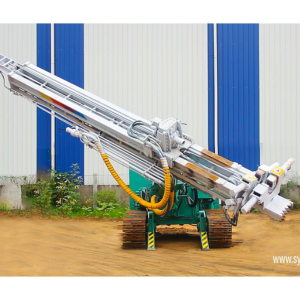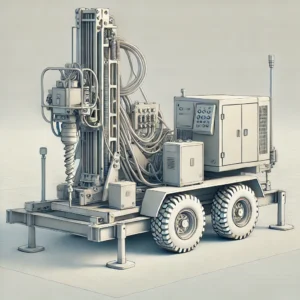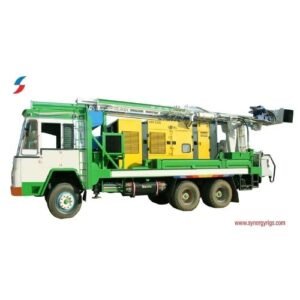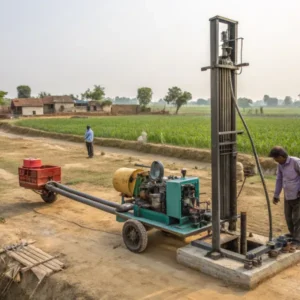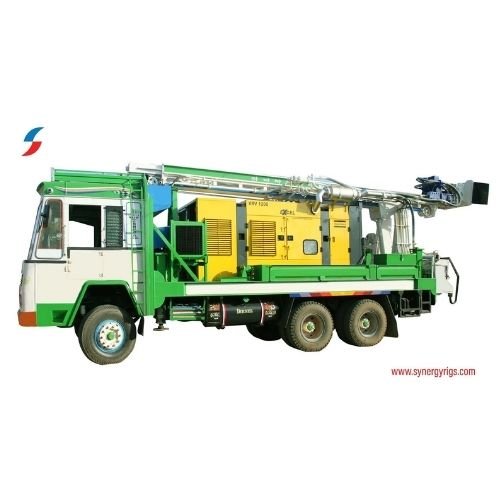
DTH Borewell drilling equipment
Manufacturer and Supplier of DTH sensor borewell rig drilling equipment and DTH borewell machine in India. We offer best price for DTH boring machine.
What Is a DTH Borewell Drilling Machine?
A DTH (Down-The-Hole) drilling machine drives its hammer and drill bit directly at the bottom of the borehole, powered by compressed air rather than surface-mounted rotary force. This keeps the full striking energy concentrated at the rock face, making a DTH machine one of the fastest and most efficient ways to drill through hard rock, laterite, and mixed-hardness formations.
Synergy Rigs manufactures and exports sensor-mounted DTH borewell machines, boring rigs, and related drilling equipment. Every unit is fitted with sensors and monitors that track the exact bit position throughout the drilling and boring operation, giving operators real-time visibility into depth, alignment, and progress — a level of monitoring most conventional borewell machines don't offer.
How DTH Drilling Works
Compressed air is delivered down the drill string to a piston inside the DTH hammer. The piston strikes the button bit thousands of times a minute while the string rotates slowly, and the same air flow flushes cuttings back up the borehole. Because the hammer sits right at the bit instead of transmitting force from the surface, a DTH drilling machine loses far less energy to the drill string — which is why it out-performs standard rotary rigs once the ground turns to hard rock.


Where a DTH Borewell Machine Is Used
- Hard-rock and laterite water well drilling where standard rotary bits lose speed
- Mining exploration boreholes that need fast penetration through rock
- Foundation and piling work in rocky ground
- Re-drilling or deepening existing borewells that have hit rock
If your site is softer soil or sand rather than rock, our rotary and hydraulic borewell rigs may be a better fit — our team can help you choose based on your soil report.
Why Choose Synergy Rigs' DTH Machine
- Sensor-tracked drilling — know your exact bit position and depth at every stage, not just at the end of the run
- Mountable on truck, tractor, or crawler chassis to match your site and terrain
- Built for India's toughest formations, including granite and laterite belts
- Pan-India and export support, with spares and technical training included
See our rock-specialized borewell rigs for another hard-terrain option, or explore our full borewell drilling rig range.
DTH Borewell Machine FAQs
What is a DTH drilling machine?
A DTH (Down-The-Hole) drilling machine is a borewell rig where the hammer and drill bit are driven by compressed air at the bottom of the hole itself, rather than from the surface — making it especially fast and efficient in hard rock.
What is a DTH borewell machine used for?
It's used for drilling water borewells, mining exploration holes, and foundation/piling boreholes in hard rock, laterite, and mixed-hardness ground where standard rotary drilling slows down.
How is DTH drilling different from rotary drilling?
Rotary rigs transmit cutting force from the surface through the drill string. A DTH machine puts the hammer directly at the bit, so almost all the striking energy reaches the rock face — giving faster, straighter holes in hard formations.
What sensors does Synergy Rigs' DTH machine use?
Our DTH borewell machines are fitted with sensors and monitors that track bit position throughout the drilling operation, so operators can follow depth and progress in real time rather than estimating it.
Can a DTH rig be mounted on any truck?
Our DTH borewell machines can be configured for truck, tractor, or crawler mounting — tell us your preferred chassis and site conditions and we'll recommend the right configuration.
Need a DTH borewell machine sized to your site and rock conditions?
Specifications
| Minimum Order Quantity | 1 Unit |
| Drilling Rig Type | DTH |
| Model Number | SR1000 |
| Capacity (Feet) | 1200 |
| Hole Diameter | 100-200 mm |
| Power Source | Hydraulic |
| Drilling Depth | 200-300 meters |
| Automation Grade | Manual |
| Air Compressor (psi) | 600 |
| Oil Tank Capacity (Litre) | 600 |
| Rotary Head | 2 TYPP |
| Usage | Water Well |
| Brand | SR1000 |
| Condition | New |
Features
- Highly Efficient
- Optimum operational costs
- Hassle-free operation
- Optimal energy exploitation